
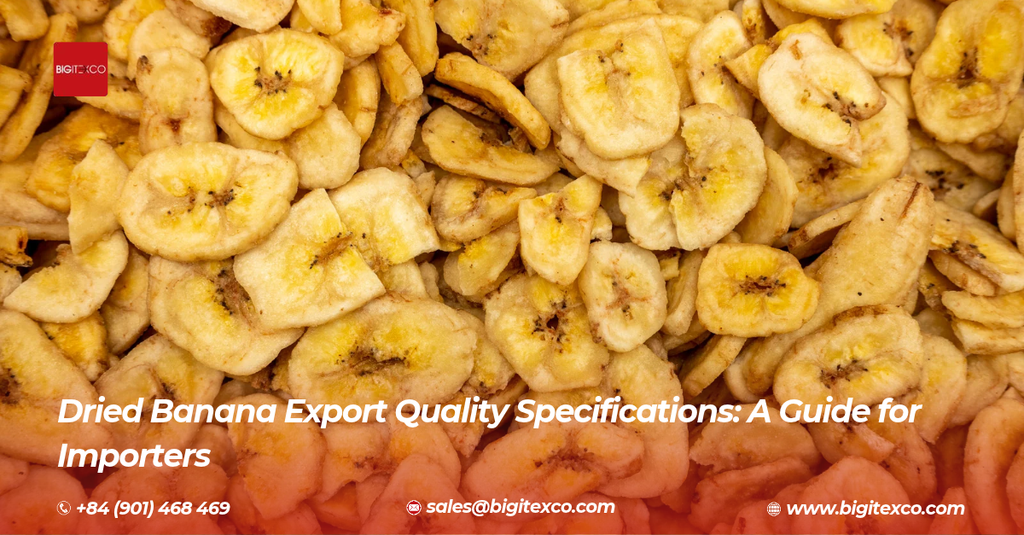
Dried bananas are used in retail snacks, breakfast cereals, bakery products, confectionery and food ingredient blends. For international buyers, however, selecting a suitable product involves more than checking its colour or sweetness. Importers need to understand the product format, moisture content, texture, ingredients, food safety requirements and packaging conditions.
A clear product specification helps suppliers and buyers agree on measurable quality expectations before production and shipment.
Summary
Dried banana quality should be evaluated according to its processing method and intended application. For naturally dried bananas, the UNECE DDP-29 standard specifies a maximum moisture content of 18%. For dried bananas treated with preservatives or preserved by other means, it specifies a moisture range of 18–25%. These values apply within the scope of that standard and should not automatically be applied to fried banana chips or other processed products.
In this article
1. Dried Banana Export Quality at a Glance
Dried banana products can differ considerably in appearance, texture, formulation and processing method. A buyer should identify the exact product before comparing technical specifications.
| Quality factor | What importers should check |
|---|---|
| Product form | Slices, lengthwise halves, strips or diced pieces |
| Processing method | Natural drying, hot-air drying or another specified process |
| Moisture content | Target based on product type and applicable specification |
| Colour | Characteristic colour with acceptable variation |
| Texture | Soft, chewy, firm or crisp, according to the product |
| Ingredients | Banana content, added sugar, preservatives, oil and other ingredients |
| Defects | Mould, insects, foreign matter, burns and deterioration |
| Food safety | Microbiological quality and applicable chemical contaminant limits |
| Packaging | Food-grade material, sealing, moisture protection and traceability |
| Documentation | Product specification, COA and relevant export documents |
2. Understanding Different Dried Banana Product Types
The term “dried banana” can refer to several products. Buyers should distinguish between naturally dried banana pieces and fried or otherwise processed banana products because their specifications and quality expectations are different.
Naturally dried bananas
These products are made by removing moisture from ripe bananas through a drying process. Depending on the process, they may have a soft, chewy or relatively firm texture.
Typical applications include:
- Retail dried fruit snack packs.
- Mixed tropical fruit products.
- Breakfast cereals and granola.
- Bakery and confectionery ingredients.
- Foodservice portions.
Sweetened or preserved dried bananas
Some products contain added sugar, fruit juice, preservatives or other permitted ingredients. These additions can influence sweetness, texture, moisture and product appearance.
Buyers should request a complete ingredient declaration rather than assuming that all dried banana products contain only banana.
Banana chips
Banana chips are a separate commercial category when they are fried or otherwise processed with oil. Their texture is usually crisp, and their quality assessment may include the type of oil used, free fatty acids and peroxide value.
The UNECE DDP-29 standard for dried bananas specifically excludes products processed by salting, sugaring, flavouring or roasting, as well as products intended for industrial processing. Therefore, buyers should not automatically apply its requirements to every type of banana chip or flavoured banana product.
The CBI guide to entering the European market for dried tropical fruit also highlights the need to distinguish dried banana products from banana chips when assessing quality requirements.
3. Moisture Content and Water Activity
Moisture content is one of the most important parameters in dried banana specifications. It affects texture, product stability, handling and storage.
The UNECE DDP-29 standard, published in 2018, establishes the following moisture criteria for dried bananas within its scope:
| Product category | UNECE DDP-29 moisture requirement |
|---|---|
| Untreated dried bananas | Maximum 18.0% |
| Dried bananas treated with preservatives or preserved by other means | Between 18.0% and 25.0% |
These figures are not universal specifications for all banana products. They apply to products covered by DDP-29, and buyers should verify whether the standard is appropriate for their product and destination market.
Why moisture matters
Excessive or inconsistent moisture may affect:
- Product texture and eating quality.
- Storage stability.
- Susceptibility to microbial deterioration.
- Product consistency between batches.
- Suitability for the intended packaging and distribution conditions.
However, moisture content alone does not fully describe the product’s stability.
Moisture content vs water activity
Moisture content measures the quantity of water in a product. Water activity (aw) measures how available that water is for microbial growth and certain chemical reactions.
Two dried banana products with similar moisture content can have different water activity values because of differences in ingredients, sugar concentration and product structure.
For this reason, buyers may specify both moisture content and water activity when the product or risk assessment requires it.
Practical recommendation: Agree on the measurement method, target value and acceptance tolerance with the supplier. Use a consistent laboratory method for incoming inspections and resolve any differences before shipment.
Reference: UNECE DDP-29 – Dried Bananas.
4. Appearance, Colour and Texture Requirements
Appearance and sensory characteristics influence both retail presentation and the suitability of dried bananas for food manufacturing.
Colour
Dried banana colour can vary according to:
- Banana variety.
- Ripeness at the time of processing.
- Cutting and pretreatment methods.
- Drying temperature and duration.
- Exposure to oxygen and storage conditions.
- Use of permitted additives or preservatives.
A buyer should define an acceptable colour range using approved samples or product photographs. Natural variation should be considered, particularly when sourcing fruit from different harvests.
Texture
The required texture depends on the product’s intended use.
| Intended application | Desired texture |
|---|---|
| Direct snack consumption | Soft, chewy or pleasantly firm |
| Breakfast cereals | Suitable for the required eating experience and moisture conditions |
| Bakery ingredients | Stable enough for handling and mixing |
| Fruit snack blends | Consistent with the other ingredients |
| Banana chips | Crisp and crunchy |
The terms “soft,” “chewy” and “crispy” should be supported by a sample or a more specific description wherever possible.
Defects and appearance checks
The UNECE DDP-29 standard includes minimum requirements for dried bananas. Among other things, products should be sound, clean and practically free from visible foreign matter, living pests, mould filaments visible to the naked eye, fermentation and abnormal external moisture.
It also addresses burns and discolouration. Under the standard, these defects should not affect more than 20% of the product’s surface in aggregate.
Importers should also inspect for:
- Excessive black spots or undesirable browning.
- Insect damage.
- Crushed or severely damaged pieces.
- Foreign materials.
- Unusual odour or taste.
- Inconsistent colour between packages.
The final acceptance criteria should be recorded in the purchase specification rather than left to subjective inspection alone.
5. Cut Styles and Size Consistency
Dried bananas can be supplied in several forms. The selected cut style affects packaging, portioning, appearance and production efficiency.
The UNECE DDP-29 standard recognises the following presentations:
| Cut style | Description | Potential applications |
|---|---|---|
| Cross-cut slices | Oval or rounded slices cut across the fruit | Retail snacks and cereal blends |
| Lengthwise cuts | Halves or sections cut along the fruit | Snack packs and foodservice |
| Strips | Long, narrow pieces | Snack products and ingredient blends |
| Diced pieces | Irregular chunks or approximately equal-sized cubes | Bakery, cereals and confectionery |
Uniformity in size is not mandatory under DDP-29, although pieces should be reasonably uniform in shape and size.
For commercial purchasing, buyers may still require tighter size tolerances to suit their packaging or manufacturing equipment.
What should buyers specify?
- Required cut style.
- Length, width and thickness where relevant.
- Acceptable size variation.
- Percentage of broken or irregular pieces.
- Maximum acceptable fines.
- Appearance and colour requirements.
A manufacturer using automated dosing equipment may need a more consistent cut than a business selling mixed dried fruit in retail pouches.
6. Ingredients, Food Safety and Destination-Market Requirements
A complete dried banana specification should cover ingredients and food safety as well as physical quality.
Ingredient declaration
Importers should confirm whether the product contains:
- Banana only.
- Added sugar or fruit juice.
- Preservatives.
- Antioxidants or acidity regulators.
- Salt, oil or flavouring ingredients.
- Other processing aids or ingredients that must be declared under applicable rules.
The ingredient declaration should match the actual product and the final label.
Food safety testing
Depending on the destination market, product type and buyer risk assessment, importers may request testing for:
- Salmonella.
- E. coli.
- Yeast and mould.
- Total plate count.
- Pesticide residues.
- Heavy metals or other relevant contaminants.
- Other parameters specified in the purchasing contract.
For banana chips, additional checks may be relevant to the frying oil, including free fatty acids and peroxide value.
European market considerations
For businesses importing dried bananas into the European Union, the CBI market-entry guide identifies several important areas:
- Compliance with applicable food safety and contaminant legislation.
- Pesticide residue limits.
- Approved additives and accurate ingredient declarations.
- Traceability and lot identification.
- Bulk and retail labelling.
- Product quality and defect tolerances.
The CBI guide also notes that European buyers frequently request recognised food safety certification, even though certification itself is not a universal legal prerequisite for every dried fruit product. Buyer requirements should be distinguished from statutory import requirements.
For bulk packaging, the guide identifies product name, country of origin, moisture level, cut style, lot code, net weight and shelf-life information as relevant labelling details. The exact mandatory information should be checked against the applicable market rules and product category.
Reference: CBI – Entering the European Market for Dried Tropical Fruit, updated 22 January 2026.
7. Packaging, Storage and Export Documentation
Even a product that meets its original quality specification can deteriorate if packaging and storage conditions are unsuitable.
Dried bananas should be packed in materials appropriate to the product’s moisture sensitivity, transportation conditions and intended shelf life.
Packaging considerations
Importers should confirm:
- Food-contact suitability of packaging materials.
- Inner liner and outer carton specifications.
- Effective sealing and moisture protection.
- Net weight and packaging configuration.
- Protection against physical damage.
- Batch identification and traceability.
For products with a soft texture, packaging should protect against contamination and unwanted moisture changes. For crisp banana chips, moisture protection is particularly important to help preserve crispness.
Storage and transportation
The supplier should provide storage instructions based on the product’s characteristics and validated shelf-life information.
Buyers should consider:
- Clean and dry storage areas.
- Protection from direct sunlight and excessive heat.
- Avoidance of condensation and moisture exposure.
- Separation from strong-smelling materials.
- Proper handling during loading and transportation.
Export documentation checklist
Before shipment, importers may request the following documents, depending on the order and destination:
| Document | Purpose |
|---|---|
| Commercial invoice | Commercial transaction details |
| Packing list | Package count, weights and packing information |
| Product specification | Agreed technical and quality requirements |
| Certificate of Analysis | Test results for the relevant lot |
| Ingredient declaration | Product composition |
| Certificate of origin | Origin documentation, where required |
| Health or phytosanitary documents | Only where applicable to the product and destination |
| Transport document | Evidence of shipment and transport details |
A lot-specific COA should be reviewed against the agreed specification. Buyers should also confirm whether laboratory testing is conducted by the supplier or an independent laboratory.
8. FAQs, Conclusion and Request a Quotation
Frequently Asked Questions
1. What is the maximum moisture content for dried bananas?
Under UNECE DDP-29, untreated dried bananas must not exceed 18% moisture. Dried bananas treated with preservatives or preserved by other means have a specified range of 18–25%. These limits apply within the standard’s scope and should not be treated as universal requirements for every banana product.
2. What is the difference between dried bananas and banana chips?
Dried bananas are generally dehydrated fruit products that may have a soft or chewy texture. Banana chips are commonly fried or otherwise processed to produce a crisp texture. Their processing methods and quality specifications can be different.
3. Which cut styles are available for dried bananas?
Common forms include cross-cut slices, lengthwise halves or sections, strips and diced pieces. Other presentations may also be supplied if clearly described and labelled.
4. What should importers check when buying dried bananas in bulk?
Importers should check product form, moisture, water activity where relevant, colour, texture, defects, ingredients, food safety results, packaging and lot traceability.
5. Does a dried banana supplier need food safety certification?
Certification requirements depend on the destination market and the buyer. European importers frequently request recognised food safety certification as part of their supplier approval process, but buyers should distinguish commercial requirements from legal obligations.
Conclusion
Dried banana export quality depends on the product type, processing method and intended application. Moisture content, appearance, texture, cut style, ingredient composition and food safety all contribute to the suitability of a shipment.
For importers, the most effective sourcing approach is to define a clear specification, request representative samples, review the lot-specific COA and confirm packaging and documentation requirements before shipment.
Looking for a dried banana supplier from Vietnam?
References
- UNECE – DDP-29: Standard for Dried Bananas, 29 November 2018.
- UNECE – Dry and Dried Produce Standards.
- CBI – Entering the European Market for Dried Tropical Fruit, updated 22 January 2026.